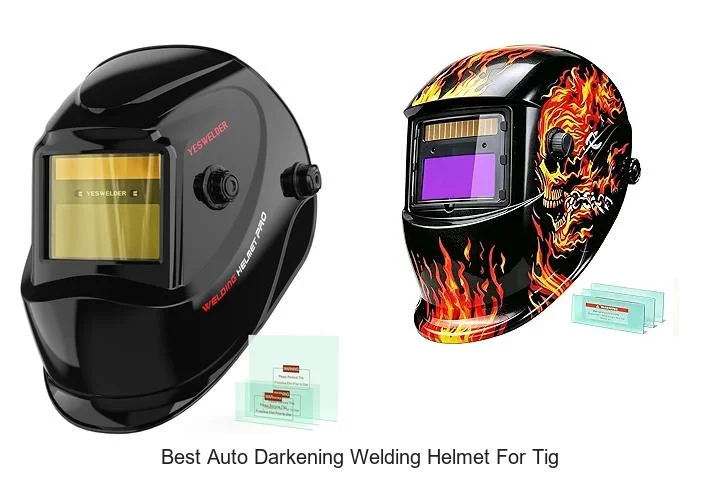
The best auto-darkening welding helmets for TIG welding do more than protect your eyes from the arc. TIG work often involves low amperage, a narrow weld pool, and long periods of close visual attention, so a suitable Helmet must detect a subtle arc quickly without darkening unpredictably. It should also provide a clear view of the joint, comfortable fit, dependable adjustment controls, and enough shade range for the materials and current levels you use.
What Makes a Helmet Suitable for TIG Welding
TIG welding places different demands on a helmet than high-amperage MIG or stick welding. The arc can be relatively faint, especially when welding thin stainless steel, aluminum, or sheet metal at low settings. A helmet designed mainly for bright, high-output work may fail to trigger consistently or may require the sensitivity control to be set too aggressively. Look for a model with a sensitivity adjustment intended to detect low-amperage TIG arcs, preferably with a stated operating range that includes the current levels you expect to use.
Shade control is equally important. Most TIG work takes place in a darkened range appropriate to the welding current, but the exact setting depends on the process, material, and applicable safety guidance. A variable shade control lets you fine-tune the lens rather than relying on a single fixed setting. A grind or cutting mode can also be useful for workshop versatility, but it should be clearly marked and difficult to activate accidentally while welding.
Do not judge protection by appearance alone. Check that the helmet is marked for the relevant workplace eye and face protection standards in your region. The filter should transition to its dark state rapidly when the arc starts and return to its light state at an adjustable delay after the arc stops. Reaction time is only one part of protection, however; correct shade selection, a properly fitted helmet, and safe work practices remain essential.
Sensitivity and Reaction-Time Features to Compare
Sensitivity is one of the most important controls for TIG. It determines how readily the filter responds to an arc. A higher sensitivity setting can help with low-current starts, but excessive sensitivity may cause the lens to react to nearby welding, bright work lights, or reflections. Independent sensitivity adjustment is more useful than a vague one-control design because it allows the operator to match the helmet to the work area.
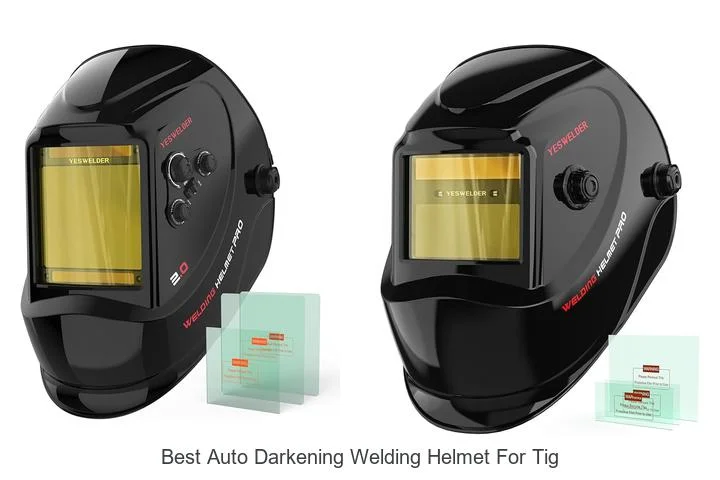
Reaction time should be fast enough that the lens darkens before the arc becomes uncomfortable to view. Manufacturers commonly describe this in fractions of a second, but figures from different brands are not always directly comparable because testing methods and specifications can vary. Treat a fast published response as a useful feature, not as a substitute for checking the helmet’s low-amperage TIG performance and certification markings.
A variable delay setting helps control how long the lens stays dark after the arc stops. A shorter delay can make repetitive tack welding feel more responsive, while a longer delay can reduce the annoyance of the filter switching back and forth during brief pauses. Two or four independent arc sensors generally provide more reliable detection when the helmet is angled or when part of the view is blocked, although sensor placement and electronics quality matter as much as the number of sensors.
Lens Clarity and Viewing Area for Precise TIG Work
✅ 7 Best Welding Helmets [2026] 🔥 Auto Darkening for TIG & MIG — Beginner to Pro
TIG welding rewards a clean, undistorted view. When comparing lenses, look for an optical clarity rating such as 1/1/1/1. This rating refers to several aspects of filter performance, including optical clarity, diffusion of light, consistency of luminous transmittance, and angle dependence. A 1/1/1/1 rating is a useful sign for detailed work, but it should be considered alongside the actual viewing area, color rendition, and the quality of the outer and inner cover lenses.
A larger viewing window makes it easier to track the tungsten, filler rod, and edge of the joint without repeatedly moving your head. However, a larger window can add weight and may increase the replacement cost of cover lenses. For bench work, a wide field of view is often worthwhile. For overhead welding or work in tight spaces, a more compact shell may balance better and be less likely to strike nearby surfaces.
Color representation can affect comfort and control. Some modern filters are designed to show a less green, more natural view of the weld area, which may make it easier to distinguish the puddle from the surrounding metal. This is a preference as well as a specification issue: compare published color claims carefully, and if possible, assess whether the lens provides a useful view of fine joint details rather than focusing only on a marketing label.
Best TIG Welding Helmets by Budget and Use Case
For occasional home repairs, prioritize reliable arc detection, straightforward controls, a comfortable headgear system, and readily available replacement cover lenses. A basic auto darkening lens can be a sensible choice when the work is infrequent, provided it has suitable TIG sensitivity and the correct shade range. Avoid paying for advanced features that will not improve the jobs you actually perform, but do not economize on certification, fit, or lens clarity.
For regular fabrication or maintenance work, a mid-range helmet is often the best balance. Features worth seeking include independent shade, sensitivity, and delay controls; multiple arc sensors; a broad viewing area; a dependable low-battery indicator; and headgear that stays stable when you look down. A model with replaceable batteries may be convenient for continuous shop use, while a solar-assisted design can reduce battery changes if it still has a clearly specified backup power source.
For precision TIG, frequent use, or long sessions, prioritize optical performance and ergonomics over decorative features. A lighter shell, balanced center of gravity, fine ratchet adjustment, and a comfortable sweatband can reduce fatigue. Digital controls may make settings easier to repeat, but simple analog controls can be perfectly effective when they are clearly labeled and resistant to accidental movement. Extra side windows can expand peripheral vision, although they may introduce more reflections in some lighting conditions.
Recommended products
Use these catalog picks as a shortlist for best auto-darkening welding helmets for tig welding. Compare measurements, materials, and return terms side by side instead of buying from a photo alone.
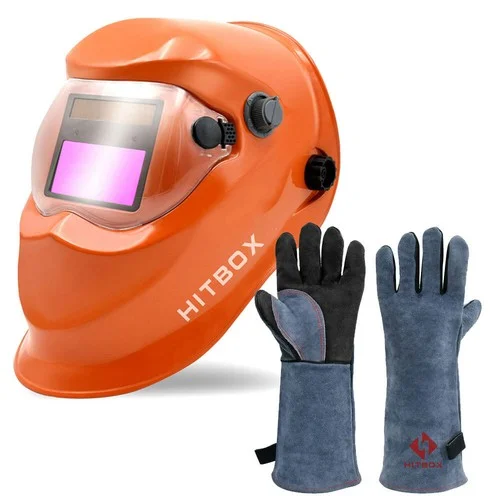

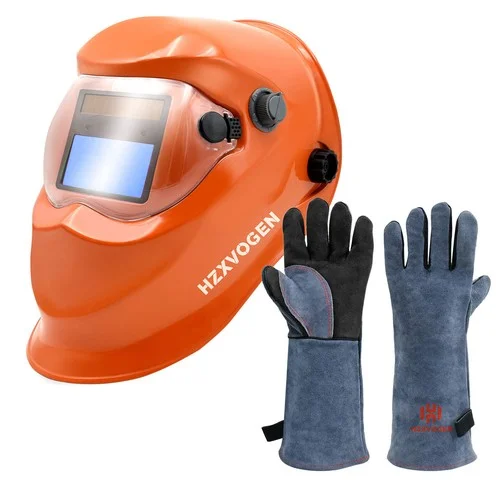
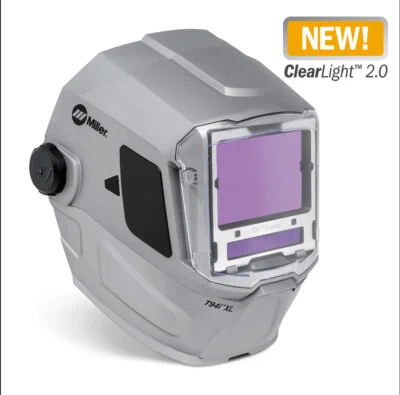
The catalog picks later on the page should be compared by trade-offs rather than by price alone. One may offer stronger low-current TIG sensitivity, another may provide the clearest 1/1/1/1 lens and largest viewing area, and a third may be lighter or easier to maintain. Check each option’s pros and cons for shade range, controls, battery arrangement, replacement lens availability, weight, and intended use before choosing the one that fits your welding habits.
Brands such as Huntsman, Instapark, and 3M may appear in searches for welding helmets, but brand recognition should not replace specification checking. Product lines can differ substantially, and a helmet from any brand should be assessed by its exact model details, certification information, lens rating, warranty terms, and availability of consumable parts.
TIG Helmet Fit, Battery Life, and Maintenance Tips
A good fit keeps the helmet close enough to protect the face without pressing uncomfortably against the forehead or glasses. Adjust the headgear so the shell stays in position when you nod or lean forward. The flip-up action should be controlled rather than loose, and the helmet should remain balanced when the lens is raised. If you use prescription glasses, confirm that the interior has enough clearance before committing to a model.
Battery arrangements vary. Some helmets use replaceable cells, some combine solar charging with replaceable backup batteries, and some use integrated rechargeable batteries. Check the manufacturer’s instructions for storage, charging, and replacement. Never assume that a dark-looking lens is powered correctly; test the controls and arc response according to the manual before welding, and replace batteries when the low-power indicator appears or the filter behaves inconsistently.
Keep the outside and inside cover lenses clean and replace them when they become scratched, cloudy, cracked, or heavily spattered. A damaged cover lens can reduce visibility and may compromise the filter assembly. Use only compatible replacement parts, avoid harsh solvents unless the manufacturer approves them, and store the helmet away from extreme heat, moisture, and unnecessary impact. Before every session, inspect the shell, headgear, lens covers, controls, and battery compartment.
The right TIG helmet is the one that detects your arc reliably, shows the weld clearly, fits securely, and remains practical to maintain. Start with protection and low-current performance, then compare optical quality, viewing area, comfort, power system, and price. That approach will produce a more useful choice than selecting solely on darkness level or the number of features printed on the box.