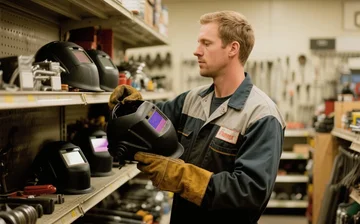
Welding Helmet Buying Guide: How to Compare Safety, Comfort, and Performance
The best welding helmets do more than darken when an arc starts. They protect your eyes and face from intense visible light, ultraviolet and infrared radiation, sparks, spatter, and flying debris while allowing you to position the torch or electrode accurately. A suitable helmet should match your welding processes, provide dependable optical performance, stay comfortable during long sessions, and remain serviceable when lenses, batteries, or headgear eventually need replacement. Comparing those factors is more useful than choosing by shell design or the darkest available shade.
Key Welding Helmet Safety Standards and Certifications
Start by checking the markings on the helmet, lens, and packaging rather than relying only on a seller’s description. In the United States, ANSI Z87.1 is a key eye and face protection standard. Welding helmets may also be evaluated against relevant requirements for filter lenses and automatic welding filters. In Canada, CSA Z94.3 is an important reference, while products sold for European markets may show compliance with EN 379 for automatic welding filters. The exact marking should correspond to the market where you will use the helmet and to the manufacturer’s documentation.
A compliant helmet is not automatically the right helmet for every task. Check the stated shade range, switching specifications, viewing-area information, and impact or electrical protection markings. The lens should remain at its specified protection level even when the battery is low or the auto-darkening function is switched off, where the design provides that protection. Never weld with a cracked cover lens, damaged shell, loose cartridge, or filter that does not pass its startup self-check. Replace transparent cover plates when pitting, clouding, or scratches begin to interfere with the work area.
Shade selection matters more than shell color
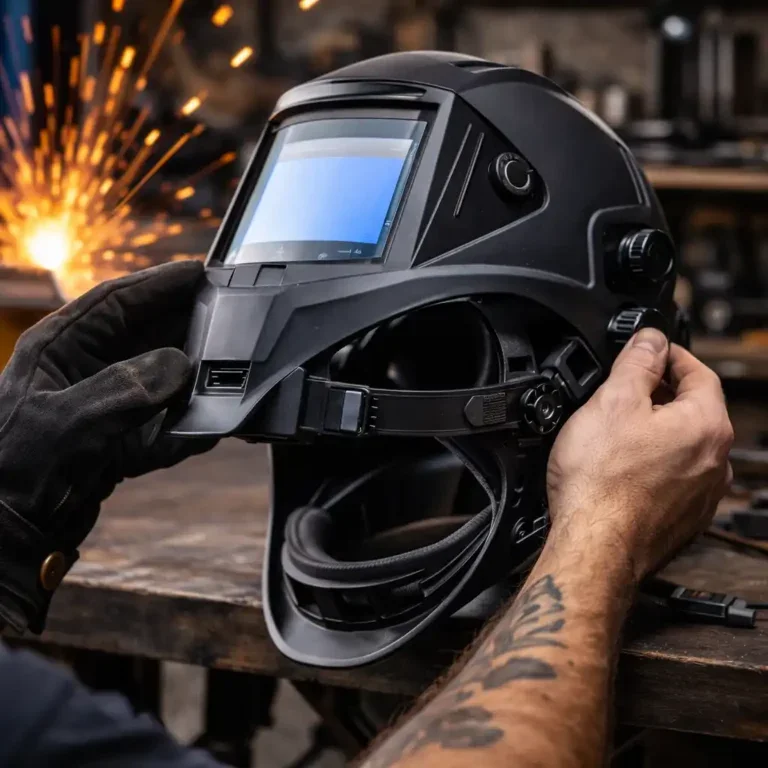
Choose the lens shade according to welding current, process, electrode or wire size, and the applicable safety guidance, not according to whether the helmet is Black or Green. A darker shade is not necessarily safer if it makes the puddle difficult to see and encourages poor positioning. Welding charts supplied by the helmet or consumable manufacturer are a useful starting point, but the operator still needs to follow workplace requirements and use the recommended minimum shade. Grinding, cutting, and gas welding may require different settings or dedicated eye protection.
Auto-Darkening Lens Features Worth Paying For
Auto darkening lenses can improve productivity because the operator can see the joint before striking an arc without repeatedly lifting the helmet. Look for independently adjustable shade, sensitivity, and delay controls. Shade adjustment lets you adapt to processes and amperage; sensitivity helps prevent nuisance switching from nearby arcs or bright work lights; and delay controls how quickly the lens returns to its light state after welding stops. These adjustments are particularly valuable when moving between low-amperage TIG work, stick welding, and higher-output MIG applications.
Reaction speed is only one part of lens quality. A good filter should provide consistent coverage across the viewing area, minimal color distortion, and a stable light state when the arc is active. Optical clarity ratings, viewing-area size, and the number of sensors deserve attention. Two or more sensors can help detect an arc when the helmet is angled, although sensor placement and the operator’s working position still matter. Grinding mode is useful for protecting the eyes from particles while keeping the lens in a light state, but it must not be confused with welding protection.
Many modern auto darkening lenses use a solar cell alongside replaceable or rechargeable batteries. Confirm how the helmet indicates a low battery and whether the manufacturer specifies a storage procedure. A helmet that requires a proprietary battery or a complete cartridge replacement may cost more over time than one with commonly available cells. If you weld infrequently, check that the lens can be tested before use and that the manufacturer provides clear instructions for long-term storage.
Comparing Helmet Weight, Fit, and Adjustability
Weight becomes noticeable when a helmet is worn for several hours, especially during overhead work or repeated repositioning. Compare the complete operating weight, including the lens cartridge and batteries, rather than the empty shell. Balance matters as much as the number on the scale. A helmet that sits close to the head and does not pull forward can feel more comfortable than a lighter model with poor weight distribution.
The Ultimate Welding Helmet Buyer's Guide | Every ESAB Auto-Darkening Helmet Compared
Examine the headgear for a smooth ratcheting adjustment, a secure crown strap, and enough range for your head size. The helmet should stay in position when you nod or look upward without requiring an excessively tight fit. Adjustable tension, angle, and distance from the face can improve comfort and create room for safety glasses, respirators, or hearing protection. A replaceable sweatband is a practical advantage for frequent use. Try to assess the helmet with the work clothing and other protective equipment you normally wear, since interference around the neck and face can be frustrating in actual use.
A large viewing window can make joint alignment easier, but it may add weight or reduce the amount of shell surrounding the cartridge. Side windows can increase peripheral awareness, though some users prefer a more enclosed design for bright work environments. Consider your workspace, posture, and need to inspect the work before paying extra for a larger field of view.
Choosing the Right Helmet for Your Welding Processes
MIG and flux-cored welding often benefit from a reliable auto-darkening lens, a broad viewing area, and controls that are easy to adjust while wearing gloves. Stick welding may place greater value on dependable arc detection, a robust outer shell, and a shade range suitable for changing electrode sizes and current levels. TIG welding, particularly at lower amperage, can be demanding because the arc may be less bright. In that situation, sensitivity adjustment, dependable low-amperage detection, and clear optical performance deserve priority over decorative features.
If you also grind, cut, or perform fabrication setup, look for a clearly marked grind mode and enough face coverage for the surrounding hazards. A welding helmet is not a substitute for suitable safety glasses, hearing protection, protective clothing, or a respirator when those controls are required. For specialized processes such as plasma cutting, verify that the manufacturer provides appropriate shade guidance and that the helmet is rated for the intended activity rather than assuming a welding setting will transfer directly.
Brand selection can help narrow the search, but the model’s specifications still matter most. Jackson Safety offers a range of protective equipment and helmet configurations, while Radnor is another name buyers may encounter across welding supplies. Lincoln Electric also makes welding helmets and related equipment. Compare each specific model’s standards markings, lens controls, parts availability, and warranty instead of assuming every helmet from one brand has the same cartridge or fit system.
Recommended products
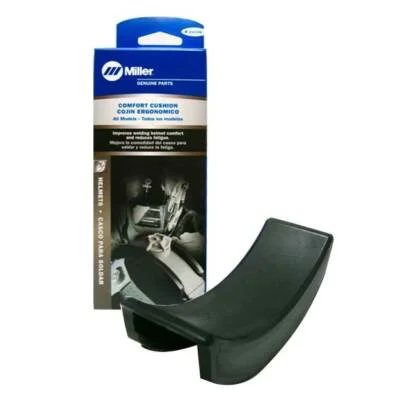
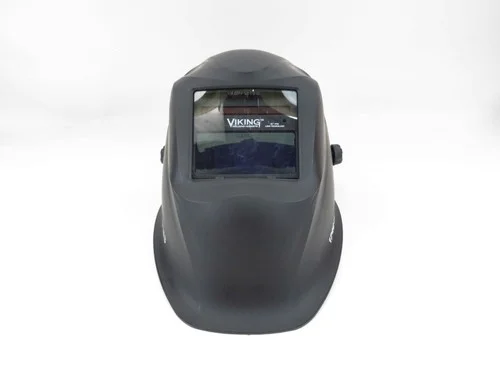
Use these catalog picks as a shortlist for welding helmet buying guide: how to compare safety, comfort, and performance. Compare measurements, materials, and return terms side by side instead of buying from a photo alone.

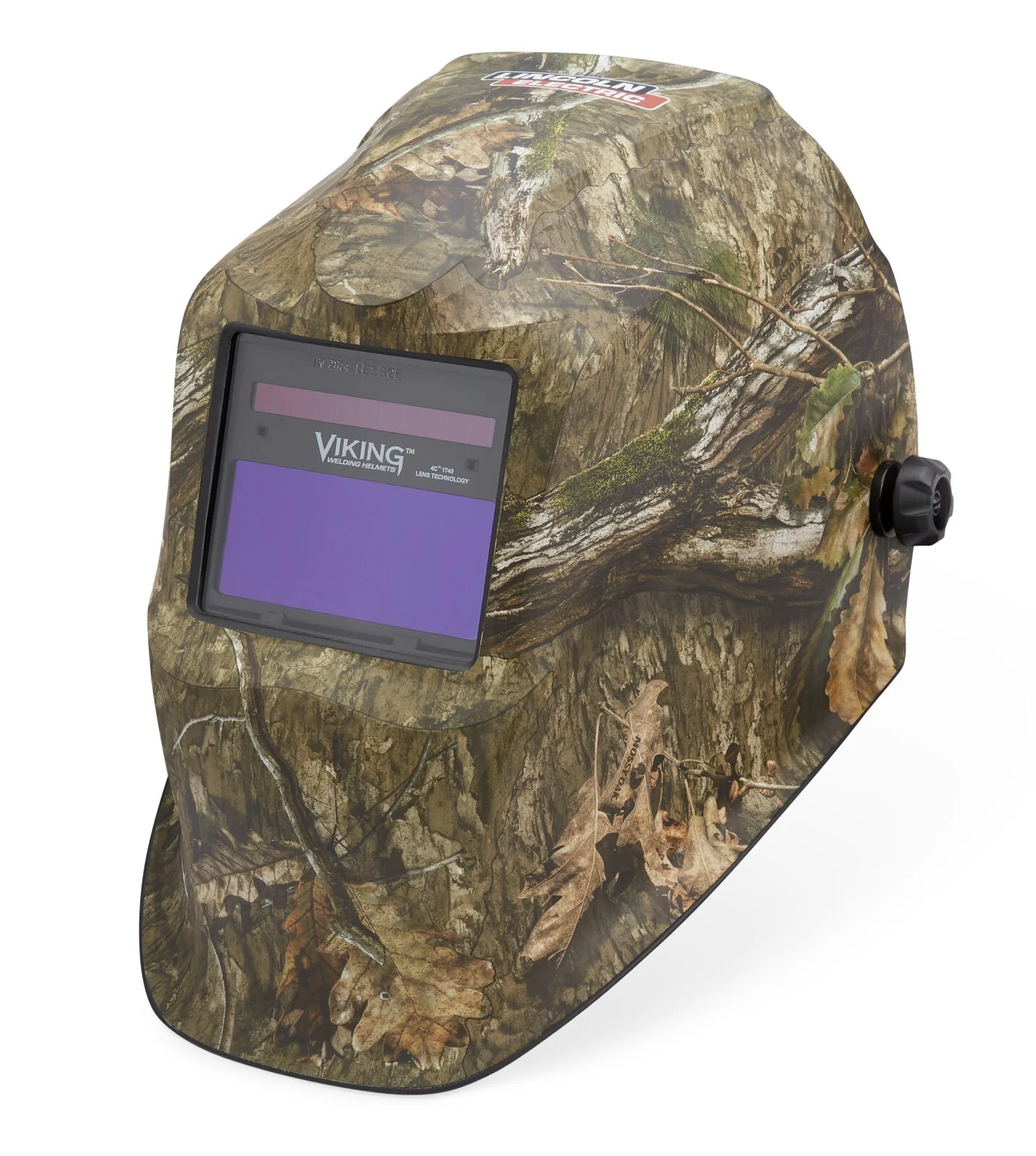
How to Compare Catalog Picks Without Overlooking Trade-Offs
When comparing the three catalog picks, treat each as a set of trade-offs rather than declaring one universally best. One model may offer a larger viewing area and more adjustments but weigh more; another may be lighter and simpler but provide fewer lens controls; a third may cost less initially while having more expensive replacement cartridges. Record the shade range, optical ratings, sensor arrangement, power system, headgear adjustments, warranty, and replacement-part prices. Then match those advantages and limitations to your welding process, hours of use, and tolerance for long-term maintenance.
Replacement Parts, Battery Life, and Long-Term Costs
The purchase price is only part of a helmet’s cost. Cover lenses are consumable items and should be easy to obtain in the correct size. Check whether the inner and outer plates are sold separately, whether the headgear can be replaced, and whether the auto-darkening cartridge is serviceable or must be replaced as a unit. A manufacturer with accessible parts and clear model numbers can make a modestly priced helmet more economical over several years.
Battery life depends on the lens design, usage, storage, and the condition of the solar charging system. Follow the manufacturer’s instructions rather than estimating life from marketing claims. Inspect the lens before every session, test the darkening function according to the instructions, and keep cover lenses clean. Store the helmet away from excessive heat, moisture, grinding dust, and direct sunlight when it is not in use. These simple habits protect the cartridge and help reveal problems before welding begins.
A Practical Final Checklist
Before buying, confirm the helmet carries the relevant safety markings for your location, offers the shade range required for your processes, and has controls you can understand and reach. Check complete weight, balance, headgear adjustment, viewing area, sensor placement, optical clarity, battery type, and grind mode. Verify that cover lenses, batteries, headgear, and cartridges are available for the exact model. The right welding helmets are the ones that combine documented protection with a stable fit and clear visibility, so you can work accurately without treating comfort or maintenance as afterthoughts.
FAQ: Welding Helmet Buying Guide: How to Compare Safety, Comfort, and Performance
What safety standards should I look for when buying a welding helmet?+
Look for a helmet that meets applicable ANSI Z87.1 requirements and is clearly labeled with its shade range and optical performance. Check the manufacturer’s markings, certification information, and instructions rather than relying only on marketing claims. Choose a helmet with the correct fixed or variable shade for your welding process.
Are auto-darkening welding helmets worth the extra cost?+
Auto-darkening helmets can be worth paying more for because they switch from a light state to the selected welding shade without requiring you to lift the helmet between welds. Useful features include adjustable sensitivity, delay controls, a wide viewing area, and consistent lens performance. Make sure the helmet also has a suitable light-state shade and a reliable manual override or test function.
How heavy should a welding helmet be for comfortable long-term use?+
Choose the lightest helmet that provides the coverage, viewing area, and features you need, especially for extended fabrication or overhead work. A well-balanced shell and adjustable headgear can matter as much as the listed weight. Check that the forehead support, straps, and tightening mechanism hold the helmet securely without excessive pressure.
Which welding helmet shade is right for MIG, TIG, and stick welding?+
The correct shade depends on the welding process, amperage, and applicable safety guidance, so use the shade chart supplied with the helmet and your equipment. Variable-shade helmets are useful when switching between lower- and higher-amperage work, while fixed-shade models can suit a consistent process. For TIG welding, confirm that the helmet can handle the low-amperage range you use.
What replacement parts and battery features should I check before buying a welding helmet?+
Confirm that replacement lenses, cover plates, sweatbands, headgear, and batteries are available and reasonably priced. Check the expected battery type and whether the helmet uses replaceable batteries, solar assistance, or both. Include these parts and the battery replacement schedule in the helmet’s long-term cost, particularly if you weld frequently.